
Flag

USPS News You Can Use

News You Can Use.

Next USPS price increase expected in July 2027.

USPS Price Increases.

The USPS cannot raise prices whenever desired. Its regulator, the Postal Regulatory Commission (PRC), now limits the Postal Service to one price increase per year. Rate increases are generally based on inflation and density rate authority.

Density Rate Authority.

In addition to the inflation cap, USPS has another primary tool to adjust prices called “density rate authority.” The USPS must deliver mail to every address in the country, six days a week, no matter how much mail volume exists. When the number of addresses keeps growing but the amount of mail is shrinking, the cost of delivering each individual piece goes up. Density rate authority lets USPS capture this cost increase. It is calculated once a year from audited financial numbers, usually filed each December.

Recent News.

The USPS wanted to raise rates again in January 2027, to accelerate revenue generation and align price changes more closely with calendar year fiscal cycles ending in December. It asked the PRC for permission to use early, estimated numbers (instead of waiting for final audited figures) to implement a rate increase that combined both the inflation cap and this extra density boost.

On August 21, the PRC denied the USPS’ request to calculate and apply early “density” rate authority for January 2027 because the USPS failed to show sufficient cause to use estimated data.

What’s Next.

The USPS can still raise rates in January 2027, but for now, it’s limited to the standard inflation-based increase, not the larger, density-boosted adjustment. So, if a January adjustment happens, expect it to be smaller than recent increases because it will be limited to the rate of inflation.

If that does not take place, expect the next increase to take place in July 2027 with “current” estimates as high as 6% to 7% (this a blended average for all Market Dominant Products such as Periodicals and Marketing Mail).

How We Can Help.

Our team is ready to help you with mailing strategies that optimize postage costs and response. Stay tuned for the release of our 2027 USPS Postal Promotions & Incentives Guide.

shutterstock_1301325586 (1)

Postage Increases Don’t Have to Mean Less Mail – They Demand Smarter Strategy

Postage increases continue to change the economics of direct mail, but more importantly, they are reshaping how direct mail is designed and executed. The latest changes, including increases to letter rates and the sunset of the Catalog Insights Promotion, are prompting marketers to take a closer look at format, structure, and overall program efficiency.

Rather than pulling back, the most forward-thinking brands are adapting. They are rethinking how to deliver the same level of impact such as brand storytelling, product visibility, and customer engagement within a more optimized cost structure. That shift is driving smarter decisions around format, design, and ultimately, the role that paper plays in the overall experience.

From Cost Pressure to Smarter Format Strategy

As postage economics evolve, many brands are reevaluating format choices. In some cases, that means reducing flat-sized catalogs. In others, it means re-engineering them. Think: transitioning into more efficient formats such as slim-jims, self-mailers, or compact booklet-style mailings that qualify for letter rates.

Brands can still rely on direct mail to tell stories, showcase products, and create tangible brand experiences. That doesn’t change. What does change is how those experiences are delivered in a more cost-effective way.

And this is where the paper conversation becomes critical.

Why Paper Strategy Matters More Than Ever

Many of today’s catalog-like letter formats still depend on coated freesheet to deliver the visual quality, color fidelity, and brand presence marketers expect. In a smaller format, the role of the paper becomes even more important because it must do more, in less space.

This creates a more nuanced demand dynamic:

  • – Traditional large-format catalog volume may face pressure
  • – Smaller, more targeted coated applications may grow
  • – Overall demand becomes more dependent on format mix and program design

In other words, postage increases don’t just reduce demand, they redistribute it.

Turning Pressure Into Opportunity

This is where a more strategic approach can make a measurable difference.

Postage should not be viewed as a fixed cost to absorb, but as a lever that informs how campaigns are built. From format and paper selection to targeting and frequency, the right decisions can offset increased costs while preserving, or even enhancing, performance.

At MH, we work with clients to navigate this intersection. Together, we:

  • – Evaluate where format shifts can drive efficiency without sacrificing impact
  • – Align paper selection with both brand goals and postal requirements
  • – Optimize programs to maximize ROI per piece in a rising cost environment

The goal is not to eliminate print or reduce presence, it’s to make every piece work harder.

The Bottom Line

Postage increases are not new, but the way brands respond to them is evolving.

The most successful marketers are not pulling back. They are becoming more intentional, rethinking formats, refining execution, and leveraging smarter paper strategies to maintain both efficiency and experience.

…Because direct mail remains one of the most powerful channels available, and with the right approach, it can continue to deliver, regardless of where postage goes next.

Group,Of,Paper,Plane,In,One,Direction,And,With,One

Seasonality Isn’t Just the Holidays, It’s Life Stages

For many brands, the holiday season is all-important. Retailers, consumer services, and gifting businesses often concentrate their marketing investments from October through December—and for good reason! Major annual holidays like Halloween, Valentine’s Day, Easter, Memorial Day, the Fourth of July, and Labor Day are undeniably important, shaped by each brand’s unique goals and audience.

However, true seasonality encompasses more than just these holidays. It includes life stages and real-world moments that influence consumer needs and behaviors throughout the year. These opportunities can be just as powerful (if not more so!) because they connect directly to meaningful transitions in people’s lives.

Examples of life stages:

Wedding Season (June-September): The peak time for weddings opens the door to targeted campaigns—not just for couples, but also for families, guests, and B2B brands attending and supporting these events.

New Movers (May-September): Moving season is a prime opportunity to reach households the moment they’re forming new routines and brand loyalties… and have changing priorities and needs! Leveraging new mover data from the USPS can help brands connect with potentially new customers early, beating your competitors to the door.

Back to School (BTS): This season gets earlier each year and often gets overshadowed by holiday planning. Campaigns tied to these moments can feel timely and relevant when executed thoughtfully and strategically.

National Moments & Global Events / Celebrations: Major events create shared attention and emotional connections like the Olympics. Campaigns tied to these moments will feel timely and relevant and most importantly, drive business. What’s coming up next? Let’s brainstorm together.

Local Events & Community Connections: Regional festivals, sports seasons, and community milestones offer opportunities for localized, personalized marketing that resonates deeply with specific audiences.

Tip: Utilize the USPS Personal Touch incentive? Not exactly sure what this means? Reach out & we’ll share more details!

Life stages are related to seasonality, and the importance of testing is applicable year-round. Consider testing a new seasonal campaign by experimenting with your creative approach or format, explore a new audience, integrate digital, try out different promotional offers, or launch a new program like loyalty. Even small tests can uncover valuable insights.

Expanding your perspective on seasonality can unlock new opportunities, deepen connection, and drive meaningful results. Sometimes, the most valuable “season” is simply the moment your customer is ready for something new.

Screenshot

Second Half of 2024 Will Give Marketers A Run for Their Money! (Conclusion)

Key Event #2: Shortened Holiday Season 2024

Thanks for following along in our series of key events in the second half of 2024. It’s hard to believe it’s already mid-October! Today, we’re going to discuss the impacts of the shortened holiday season, how to combat them, and what you may do afterwards to kick 2025 off on a good note.

As you know, the holiday season is the most important time of year for most marketers. However, did you know there will only be 27 days between Thanksgiving and Christmas this year? This is the fewest possible number of shopping days for the traditional holiday season. Therefore, marketers need to be extra prepared for the shortened shopping season to ensure you get the sales you need.  

This summer, we talked about the election. It’s important to note that consumers will be fresh off the election (which, as a reminder, they are preoccupied about the economy, macro effects, and more).   

So What? 

This shortened season really will have an impact on both consumers, and you as marketers. However, history is on your side! 2019 was the last time consumers had a 27-day holiday shopping season, which was also pre-Covid. By having a pre-Covid time to look back, it’s likely that shoppers will follow similar shopping trends as they did then.

What You Need to Know:

When there is less time to shop, consumers have historically started their holiday shopping earlier. In fact, Epsilon reported that higher revenue was generated two to three weeks leading up to Thanksgiving and the two weeks afterwards (when comparing 2019 to 2023).

Our Recommendations: 

Be strategic with this shortened shopping time frame. Manage shipping deadlines; stay vigilant about inventory; execute campaign launch dates; and optimize circulation plans.

Begin marketing communications earlier than usual. This will be key to sustaining and/ or growing revenue. Aim to get customer shopping with your post-election and pre-Thanksgiving.

Be prepared for evolving shopping behavior. Recognize that younger consumers tend to wait longer to shop during the shortened holiday season while older generations plan ahead. Personalize your marketing efforts accordingly.  

Focus on the weeks leading up to Thanksgiving and immediately afterwards. As noted above, this was a key period in 2019.

Leverage postage offers. This will help with spend and add efficiency to your direct marketing efforts (we can help sort through this with you!).

Complement your Direct Mail touch points with Digital. Enhance conversion rates with increased frequency of messaging and the speed of digital. Perhaps go deeper in your models, both house and prospect, with digital-only communications that include countdown messaging. Offer free priority shipping with a purchase over a specific value to capture share from those last minutes shoppers, create gift guides and bundles for the holiday shopping challenged…increase the value of that basket or order size! 

As fellow marketers, we are your partners. Please reach out to discuss your direct marketing strategy for the next few months. 

As always, we’re wishing you all the success this holiday season.

Source: Epsilon


Cartoon-Person-at-Computers_re

Tom Says… Here’s What You Need to Know About the January 2024 Postage Increase

It’s hard to believe that we’re already wrapping up the calendar year, and looking ahead to 2024! As the New Year rolls around, we thought it would be helpful to remind everyone about increases effective January 21, 2024.

In speaking with Tom, we were reminded about the Postal Service’s proposed postal rates that were filed back in October. Before you continue… we want to warn you, the increases are detailed! There are many! But, Tom and our team are here to work through them with you. Together we will optimize your direct mail investment with the end goal of growing your business.

Here’s a preview of what’s included in this update:

  • – Modest postage increases, 1.37% for letters, 5% – 6% for flats (catalogs) effective 1/21/2024
  • – Flats are seeing larger increases because they are not meeting their costs within the USPS
  • – Heavier flats (10 – 16 ounces) will see lower increases, just under 4% on average
  • – USPS is increasing discounts offered on 5-Digit scheme and SCF pallets to offset increases
  • – Similar increases with first class mail, 3% for a 1-ounce letter & postcards are less than 1%
  • – USPS promotions are a must for Direct Mailers to help keep costs in check
  • – All Direct Mailers should sign up for the 2024 Mail Volume Incentive Program
  • – Anticipate much larger increases in the range of 7% – 9.5% with the next increase expected in early July 2024

If you got what you need from our summary, great! If we didn’t scare you off, read on! 

What you need to know about the January 2024 postage increases

The USPS has put into place the following increases in their postal categories. Keep in mind that while these percentages are overall changes, specific sortation increases will be larger in some areas than others creating fluctuations from these announced increases.

USPS Published Rate Increases by Class

First Class Mail                                             1.969%

Marketing Mail                                              1.961%

Periodicals                                                     1.959%

Package Services                                          1.960%

Marketing Mail Increases

Letters                                                           1.333%

Flats (catalogs)                                             3.966%

Parcels                                                         20.029%

High Density/Saturation Letters                 1.073%

High Density/Saturation Flats                    2.144%

Carrier Route                                               3.963%

Every Door Direct (EDDM)                          2.525%

The January 2024 increase seems to be a consistent increase across all sortation levels within a given class of mail.  The reason why Flats & Carrier-Route Marketing Mail in increasing at a larger rate than other classes is because these are considered non-compensatory or under water products and are impacted with additional increases. For Flats, direct mailers can expect to see slightly higher increases at the high density, basic carrier route and 5-digit rates.

Letter Mail

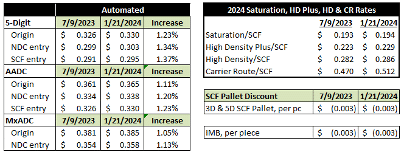
Most letters mail optimally at a 5-Digit/SCF entry mail.  The 5D/SCF for-profit rate is increasing a modest 1.37% to $0.295/pc with non-profit rates increasing 1.47% to $0.138/pc. Drop Ship discounts offered to mailers who entering mail at the destination, are not changing from current rates. 

For-Profit Letter Rates

Flats – Four Ounces & Under

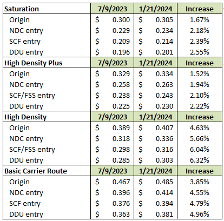
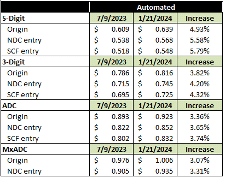
Basic Carrier Route mail will see the above average increases (4.792% at the SCF entry-level), and High Density/SCF entered mail will also see an above average increase of 6.04%. High Density rates did not increase with the last July 2023 USPS change. Good news – drop ship discounts are not changing from current rates. Non-profit rates, four ounces and under, will see lower increases than for-profit mail after experiencing higher percentages increases than for-profit mail in the last few years.

For-Profit Rates 4 Ounces & Under

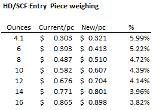
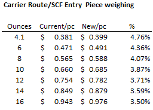
To better understand the comparison of before and after rates, here are a few for-profit sortation scenarios calculated at different piece weights:

Heavier catalogs will see lower percentage increases that books closer to four ounces.

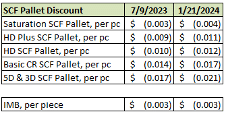
Flats Postal Discounts

The USPS is again offering higher discounts for Mailers creating SCF and Five-Digit pallets

First Class Mail

  • – A stamped one-ounce letter has increased to $0.68/pc from $0.66/pc (3.03% increase)
  • – First class flats have increased 1.44%
  • – First class postcards have increased to $0.357/pc from $0.355/pc (<1% increase)

USPS Promotions

At Media Horizons, we believe strongly in strategically using the USPS discount promotions to your advantage. As your partners, we can help you identify the promotions and determine how best to use them to ultimately achieve your goals. Here’s the latest:

  • – Tactile, Sensory & Interactive – 5% USPS incentive for Marketing Mail & First-Class Mail – 2/1/2024 – 7/31/2024
  • – Personalized Color Transpromo – 3% or 4% USPS incentive for First Class Mail – February 1st – July 31st
  • – Emerging & Advanced Technology – 3% to 4% USPS incentive for Marketing Mail & First-Class Mail

          NEW – Direct Mailer can pick the 6-month window they would like to use this promotion

  • – Reply Mail IMbA – 3% USPS incentive for First Class Mail – July 1st – December 31st
  • – Informed Delivery – 4% USPS incentive for Marketing Mail & First-Class – August 1st – December 31st

The mail preparer also receives a 0.5% incentive from the USPS

  • – Retargeting Mail – 5% USPS incentive for First-Class Mail – September 1st – November 30th

We’d love to have a conversation about your direct mail campaign, but if you want to quickly scan through the latest details, here they are! Most important takeaways: Beginning in 2025, the mobile shopping incentive will no longer be available and the gloss paper qualification will no longer be available.

Dates to mark on your calendar!

December 2024 – Mobile Shipping Advanced Technology Promotion

Did you know that there are no USPS promotions going to be offered for this coming January? On December 15th, customers should sign up for the Emerging & Advanced Technology Promotion, which can be taken during any consecutive six-month period next year. Included in this promotion is the Mobile Shopping application. By placing a mobile optimized QR code within the mail piece, the USPS is offering a 3% postage incentive during a month that does not have incentives available. The Mobile Shopping incentive offers a no-cost solution to save postage dollars. More information on this promotion is available here.

February 2024 – July 2024 – Coated Paper for the Tactile Promotion

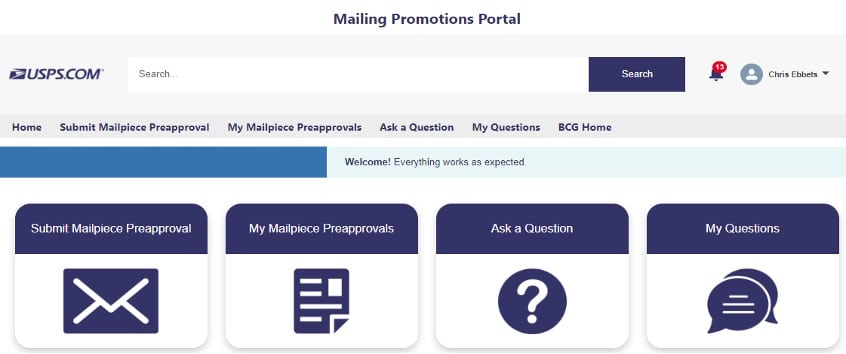
We recommend that customers mailing on coated paper sign up for the Tactile, Sensory & Interactive promotion. The USPS offers a 5% postage incentive for simply using gloss coated paper. All opportunities will be approved in advance by the USPS through their Mailing Promotions Portal (MPP). Many customers are already using gloss coated paper, so this incentive offers a potential no cost solution. Who doesn’t love a no cost solution?! If gloss coated paper is not being used or other interactive marketing elements are desired, the USPS is offering the incentive for the use of specialty inks, sensory treatments, or interactive elements. Pro tip: registration for this promotion also begins December 15th. More information on this promotion is available here.

August 2024 – December 2024 – Informed Delivery Promotion

Filling out the year, another no cost solution that offers a 4% postage incentive is Informed Delivery. Customers can sign up for this promotion starting June 15th. There is a little preparation work required to set up each campaign, but a 4% incentive is nice reward for a little amount of additional work that is required. More information on this promotion is available here.

Overall 2024 USPS Mail Volume Incentive

Lastly, we recommend that everyone sign up for the 2024 USPS Volume Incentive Program. The USPS will be offering a volume growth incentive rewarding customers for 2024 growth in pieces mailed compared with their 2023 volume baseline. The minimum baseline volume will be set at the Mail Owners actual volume or a minimum one million pieces and they are offering up to a 30% rebate on the growth to be used on future mailings after exceeding their volume threshold.

Another date to mark on your calendar! Registration will begin in November 2023, including a verification and approval process by the Mail Owner to the USPS agreeing on the designated baseline volume. The baseline period is marketing mail and first-class pieces mailed from October 2022 through September 2023. Marketing mail and first-class mail volume will be measured separately from one another and will not be combined. 

Postage rebates will be applied towards future mailing through December 2025 with potential credits becoming available in July 2024, October 2024 or February 2025.

These are the newer promotions that stuck out to us. There are others available, such as reply mail, retargeting, etc., which are just as important! 

Whew! You made it through. Thanks for sticking with us. As you know, there are so many details out there when it comes to the USPS. Our goal is to keep you informed while drilling down to the most important information that can benefit your business. As always, we’re here to chat and look forward to solving postage challenges now and in 2024! 

Cartoon-Person-at-Computers_re

Tom Says… Here’s What You Need to Know About the July USPS Increase

Thanks for bearing with us this month with this two-part post! We thought it would be helpful to refresh everyone about how postage rates are charged. Now, we can get to the super important details: this month’s USPS rate increase.

Effective July 9, 2023, the USPS has put into place the following increases in their postal categories. Keep in mind that while these percentages are overall changes, specific sortation increases will be larger in some areas than others creating fluctuations from these announced increases.

– First Class mail has increased on average of 5.38%

– Flats (catalog) mail is increasing 7.38%

– High Density / Saturation Flats is increasing 3.07%

– Carrier-Route mail is increasing 7.39%

– Letters is increasing 5.20%

– High Density / Saturation Letters is increasing 5.06%

– Periodicals (Magazines) is increasing 8.12%

– EDDM (Every Door Direct Mail) is increasing 4.76%

Letter Mail

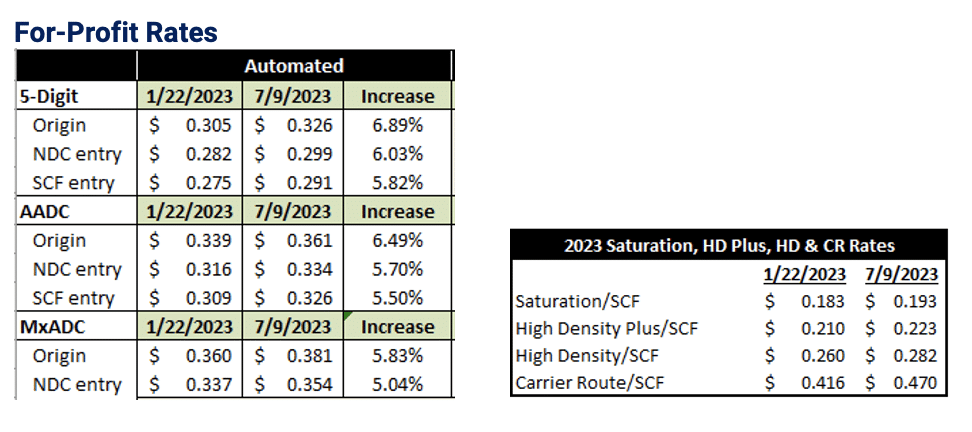
Most letters mail optimally at a 5-Digit/SCF entry mail. The 5D/SCF for-profit rate has increased 5.82% to $0.291/pc. With non-profit rates increasing 6.25% to $.136/pc. Saturation & high-density mail offers lower rate possibilities, but they are very difficult to achieve in national demographic programs.  Commingling offers cooperative solutions to help minimize postage costs and should always be considered for pieces that do not qualify for 5-Digit/SCF entered rates.

Drop Ship SCF discounts for letters is increasing to $0.035/pc vs $0.030/pc & NDC discounts are now $0.027/pc vs $0.023/pc. Non-profit rates are increasing at a higher percentage than for-profit rates.

NEW: Effective with the July changes, the USPS is now offering a SCF entry Discount for 5-Digit & 3-Digit sorted mail. A similar discount was introduced for Flat Mail in July 2022, and it will offer some postage relieve for SCF pallets. Each qualified piece can earn $0.003/pc discount.

Flats – Four Ounces & Under

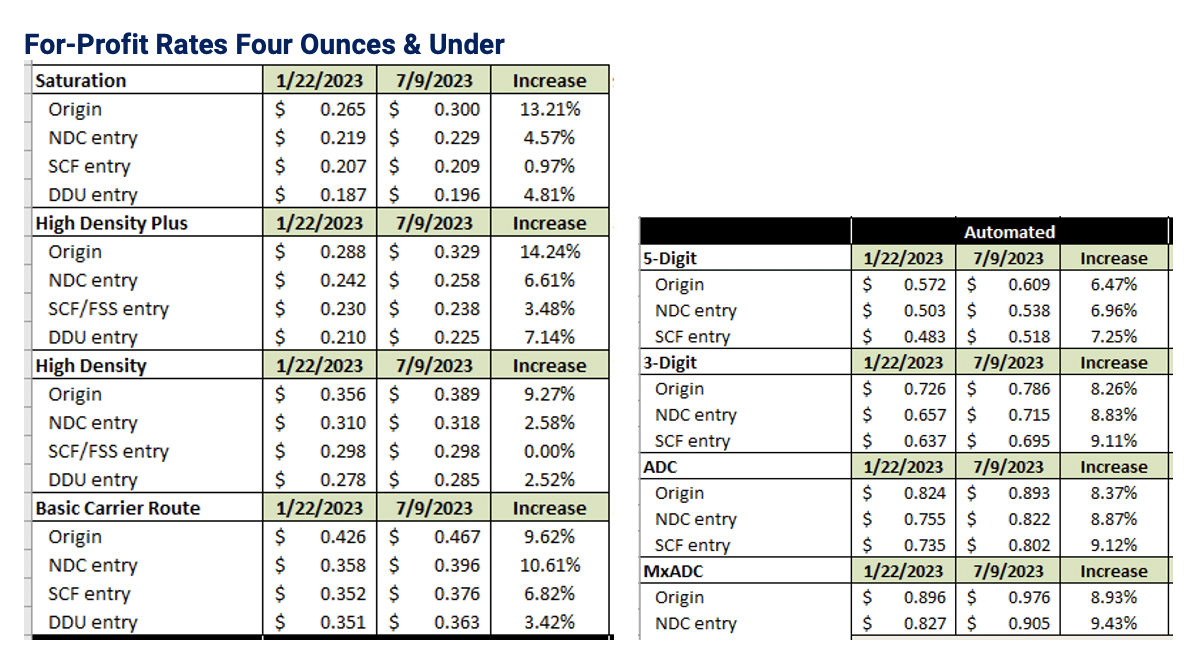
Basic Carrier Route mail will see average increases (6.82% at the SCF entry level), and High Density Plus and Saturation entry mail will see below average increases. High Density/SCF mail will see no increase after seeing much larger than average increases in the last several postal changes. Origin entered mail will see larger increases. 

As with letter mail, drop ship discounts are growing, $0.091/pc for SCF entry and $0.071/pc, over all sortation levels.

Non-profit rates four ounces and under will also see larger increases that for-profit mail. We have seen this common occurrence with non-profit rates happen over the past several postal changes as they are trying to narrow the gap difference.

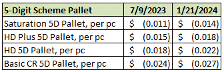
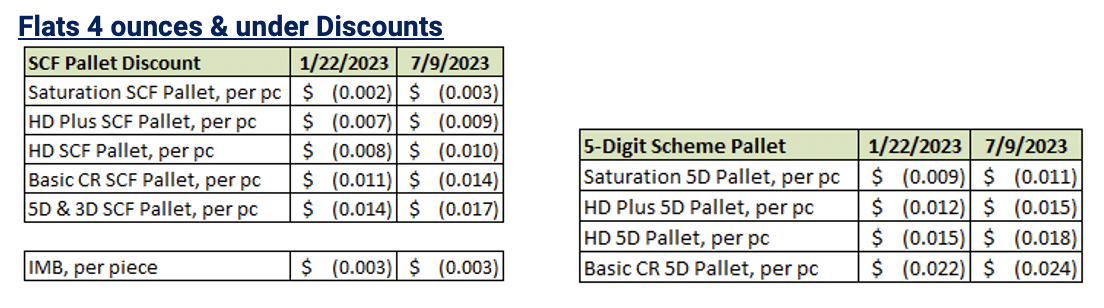
The USPS is also increasing their 5-Digit Scheme Pallet and SCF Pallet Discounts to help minimize increases. The discounts are the same regardless of for-profit or non-profit qualified mail.

Flats – Over Four Ounces

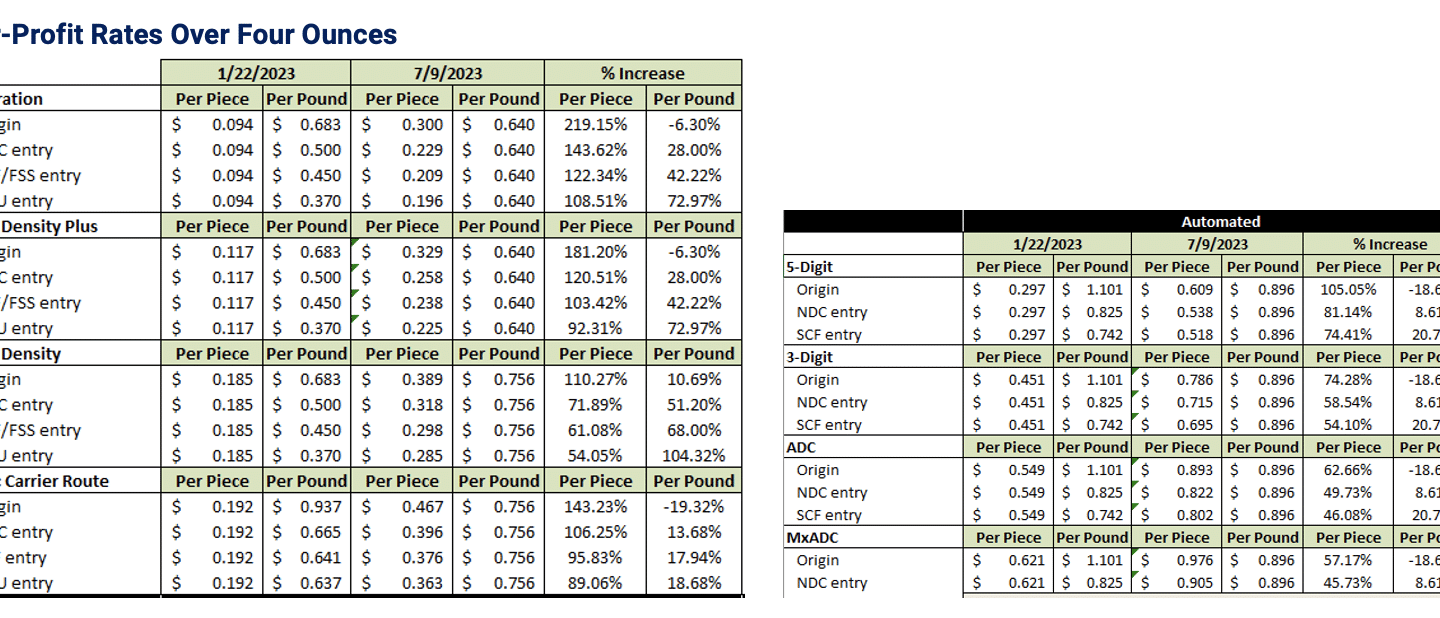
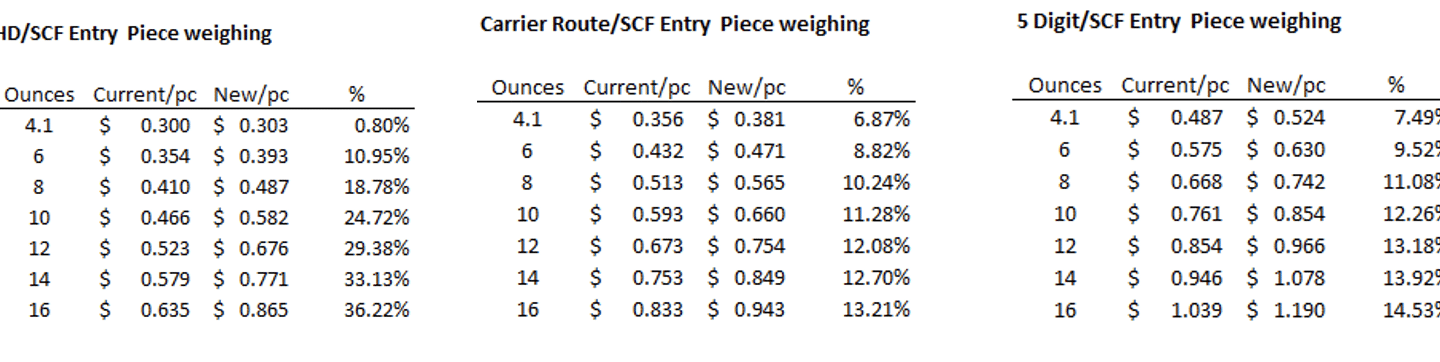
There are significant changes taking place with flats mail over four ounces. Previously, postage for pieces in this rate category received a piece postage charge PLUS a pound postage charge applied on each fraction of a pound mailed. The new rates continue to apply a piece rate, but the pound rate will only be applied for each fraction of a pound over 4 ounces (0.25#). Comparing rates from January 2023 to July 2023 will look odd (see chart below) because the new rate structure is pushing more postage in the piece portion and less in the pound portion, it is comparing apples to oranges. Drop ship discounts for pieces over 4 ounces used to be discounted from the pound portion of postage, but it will now be discounted from the piece portion of postage. You can see the differences in the chart below.

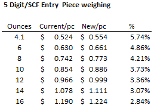
To better understand the comparison of before and after rates, here are a few for-profit sortation scenarios calculated at different piece weights:

There are three scenarios above, High Density, Basic Carrier Route & 5-Digit flat postage. As the piece weight grows, the impact of the increase also grows at a substantial rate.  Heavier pieces are seeing much higher than average postal increases.

The same Pallet Discounts as outlined for Flats four ounces and under apply to pieces over four ounces giving some relief.

First Class Mail

– A stamped 1-ounce letter has increased to $0.66/pc from $0.63/pc (4.76% increase)

– First class flats have increased 7.15%

– First class postcards have increased to $0.355/pc from $0.352/pc (<1% increase)

USPS Promotions

As a general best practice, we advocate that all direct mail customers take advantage of the discount promotions that the USPS offers. The USPS has made the approval process much easier and more responsive with the addition of the Mailing Promotions Portal (MPP) on the USPS Gateway. The USPS is managing all inquiries and approvals through the portal, so it is imperative to sign up for the service.

2024 USPS Promotions

– Tactile, Sensory & Interactive – 5% USPS incentive for Marketing Mail & First-Class Mail – 2/1/2024 – 7/31/2024

– Personalized Color Transpromo – 3% or 4% USPS incentive for First Class Mail – February 1st – July 31st

– Emerging & Advanced Technology – 3% to 4% USPS incentive for Marketing Mail & First-Class Mail

*NEWDirect Mailer can pick the 6-month window they would like to use this promotion

– Reply Mail IMbA – 3% USPS incentive for First Class Mail – July 1st – December 31st

– Informed Delivery – 4% USPS incentive for Marketing Mail & First-Class Mail – August 1st – December 31st. The mail preparer also receives a 0.5% incentive from the USPS

– Retargeting Mail – 5% USPS incentive for First-Class Mail – September 1st – November 30th

Not only can we help you take advantage of these USPS promotions, but together we can add strategy and innovation to your print marketing efforts. Additionally, with our network of printers & suppliers, we’re bound to solve challenges together that you may not have known you even had! We look forward to helping you navigate these updates and most importantly, use them strategically to ultimately grow your brand. 

Cartoon-Person-at-Computers_re

Tom Says… Here’s How Postage Rates Are Charged

We know you’ve been waiting for Tom’s latest update! So much has happened with the USPS in the last 1+ years, but we’re here to help you navigate this unchartered territory. Before we get into the actual updates that occurred this month, Tom wanted to be sure you understand the structure on how postage rates are charged.

A basic knowledge of sortation and destination entry will help with an understanding of the current rate structure.

Postal Sortation Qualification Requirements

The USPS offers discounted pricing for brands to sort the mail rather than having the USPS manage the sortation process. The higher the sortation level achieved by the brand, the lower the overall postage costs that are charged.  Achieving sortation levels to minimize postage costs are totally reliant upon where pieces are going and what volumes are going to those destinations. Common sortation qualifications include:

From top to bottom, the deeper sortation requires less USPS processing results in lower postal rates to the customer. For mailers to achieve high density & saturation postal rates, there either must be a significant volume of mail, or it must be a very regional mailing. 

Letter mail is sorted to the 5-Digit scheme rather than to the Basic Carrier Route level. The reason for this is because the USPS automation equipment will sort mail at the 5-Digit level, and they do not want mail in carrier-route bundles. The higher postage costs for Carrier-Route Letters discourage Carrier Route mail. There is an advantage for letter mail to sort to the HD, HD Plus or Saturation levels. However, it is very difficult to achieve without significant volumes. Sortation to more efficient levels is why cooperative mailing programs such as co-mail (flats & periodicals) or commingle (letters) exist and should be part of every mailing program.

Destination Entry

The USPS also offers discounts from the base rates if the mailer coordinates dropping the mail into the USPS at the destination rather than dropping at the mailer’s location. This is called destination or drop ship entry.  For this to make sense, the mailer will determine where pieces are mailing to and calculating if the USPS postal discounts exceed the additional freight costs, that the customers will be responsible for paying, in transporting and dropping to USPS facilities at the destination.

From top to bottom entry levels, origin mail is simple, but offers no discounts because the USPS must take responsibility to ship pieces to their destination while progressively larger discounts are offered for NDC, CSF & DDU entry.  DDU entry is difficult unless there is significant mail going into a specific (regional) area.  Most larger mailers will enter mail at the SCF level.

This is just a quick snapshot of how postage rates are charged. However, we felt it was important to reiterate some of these details. We all read headlines about “rate increases” and industry-wide postage changes, so we thought it would be helpful to set the stage. Stay tuned for part two highlighting the actual increases from the USPS this month!

Next up: The July 2023 USPS Increase – what it is and how you can combat it.